Cleaning
Natural Cleaning:
To clean something, you do not need to use harsh chemical cleaners. The two most important and effective items for cleaning are baking soda and distilled vinegar. Both baking soda and vinegar are safe but also capable of accomplishing any cleaning job. Distilled white vinegar can be purchased in by the gallon and baking soda can be purchased in 13.5 pound bags. Both items are extremely cost-effective.
Cleaning around the house:
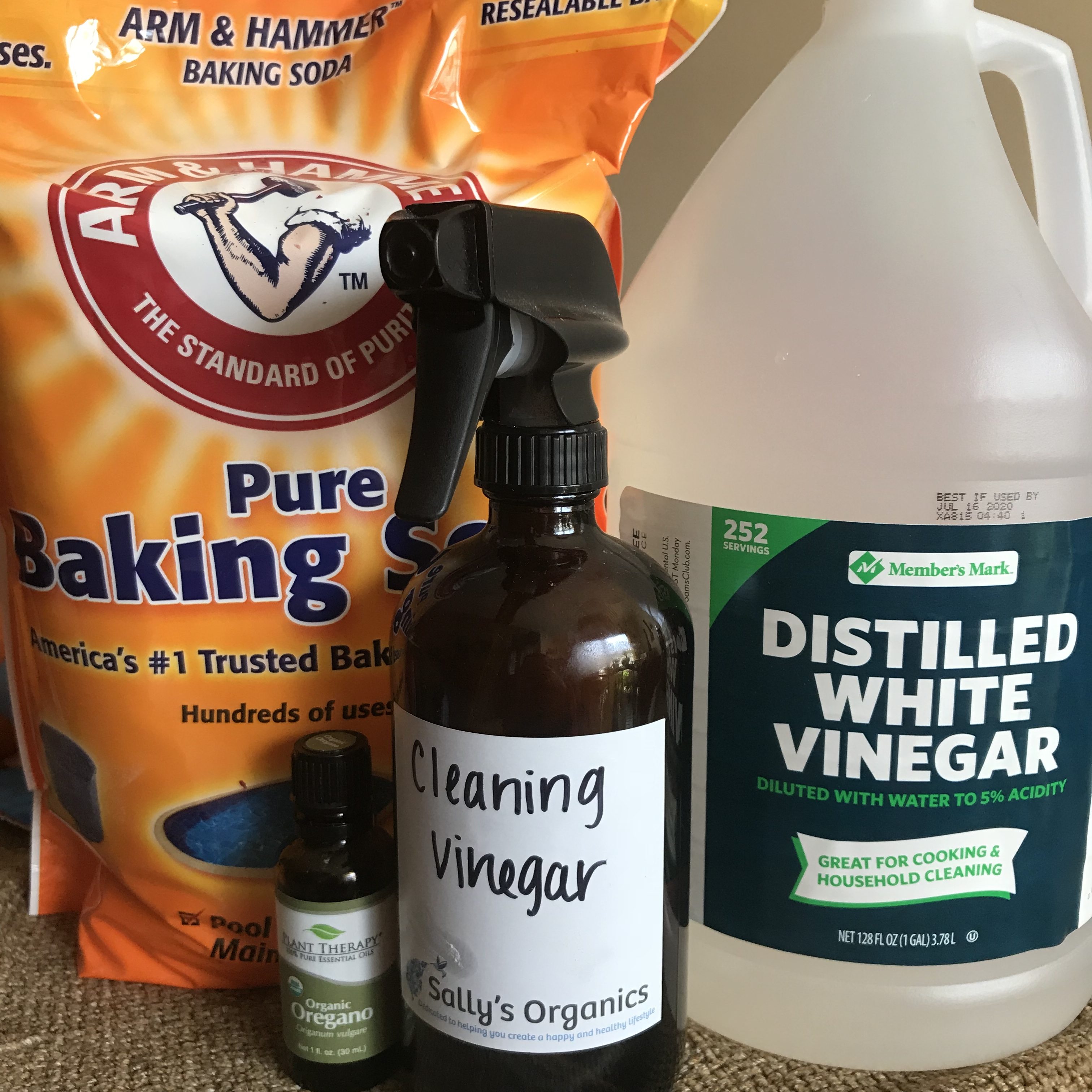
Baking soda acts as an abrasive when cleaning. It can be used to scrub any hard surface such as sinks, tubs, and countertops. Slightly wet the surface you wish to clean with a little bit of water, sprinkle on the baking soda and scrub with a rag or cleaning brush. Baking soda can even be used inside toilet bowls for cleaning to remove water lines and mildew.
White vinegar is an effective disinfectant for many surfaces. You may choose to dilute it slightly with water or use it at its full strength. A convenient way to use vinegar is to fill a spray bottle with it so it can be sprayed on surfaces. You may also choose to add a few drops of essential oils to it to improve the smell. Another use for vinegar beyond disinfecting surfaces is to use it in place of Windex/window cleaner. Vinegar can be used to clean windows and mirrors without leaving streaks. Simply spray the vinegar on the window or mirror and rub/wipe until all the vinegar is gone and you are left with a streak-fee shine.
Laundry:
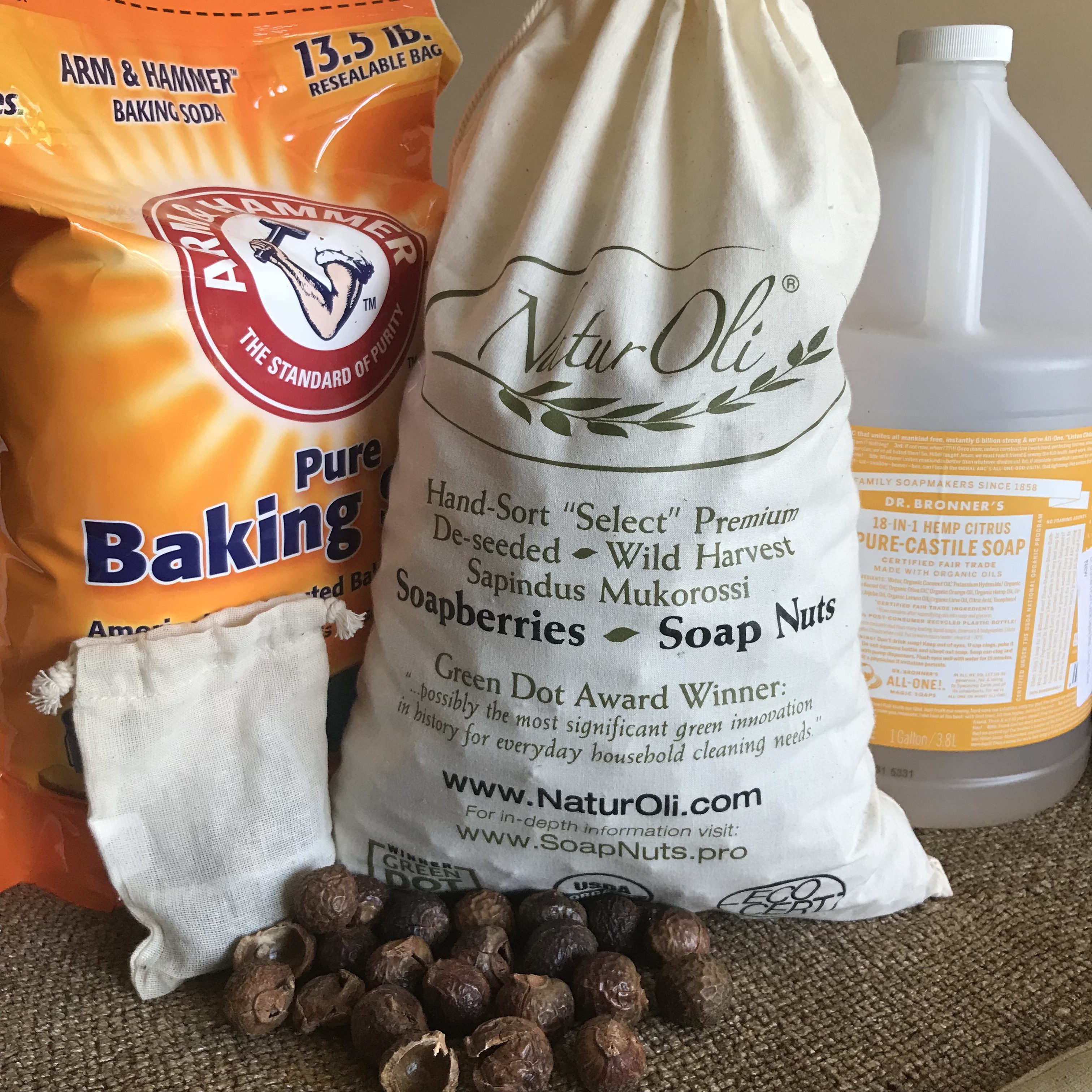
Laundry detegents and dryer sheets toady are loaded with harmful ingredients and fragrances that irritate the skin and airways. This exposure can easily be prevented with a few natural alternatives. Get rid of your typical laundry detergent and switch to things such as soap nuts, baking soda, and castile soap. Below is a description of each of these items and how to use them with your laundry. As for the dryer sheets, you really do not need them at all. They do not provide anything except a strong fragrance to laundry. There is an alternative to dryer sheets– wool dryer balls. These wool balls help to reduce static electricity in your laundry when added into your dryer in the place of dryer sheets. Essential oils can also be added to these for a slight fragrance. Do not expect the fragrance to be nearly as strong as what is expected from dryer sheets.
Baking Soda, Soap Nuts, and Castile Soap: How to use in your laundry
Soap nuts are literally what they sound like: a nut that produces soap. Soap nuts are completely natural and contain saponin. Saponin is responsible for removing dirt from your laundry. Soap nuts can be purchased in many stores and online. Simply follow the instructions on how to use them. Soap nuts typically come with a small sac that they can be put into prior to adding to your laundry. If you are using warm/hot water in your laundry, the soap nuts can be added directly to the washing machine. If you are using cold water, heat up a bowl of water in the microwave or using a tea-kettle and soak your soap nuts in the hot water for 2-3 minutes. Then, add the nuts and their liquid to your washing machine. Soap nuts can be used repeatedly until they are paper-thin, at which point you should replace them.
While soap nuts work very well on their own, I have found the most success with my laundry by combing them with two other ingredients: baking soda and castile soap. A few scoops of baking soda added to your laundry machine provides an abrasive for scrubbing action as well as an odor reducer. Baking soda also helps to brighten white articles of clothing. In combination with the baking soda and soap nuts, I add a splash of castile soap to my load of laundry. Castile soap is a natural and traditional soap that should only contain a few ingredients such as oil (olive, coconut, palm, almond, etc.), potassium hydroxide or sodium hydroxide/lye, and essential oils for fragrance. Some castile soaps also contains citric acid, rosemary extract, and/or vitamin E (tocopherol) as preservatives. Adding a splash of castile soap to your laundry will add extra cleaning power as well as a pleasant fragrance if you buy a castile soap with a scent derived from essential oils.
Carpet cleaning:
The power of baking soda and vinegar can be combined to clean carpet spots from spills or pet accidents. First, clean up as much of the spill/accident as possible from the carpet. Then, pour vinegar onto the stain. Let the vinegar sit for 2-3 minutes, then scrub the area and try to soak up as much of the vinegar as possible. Finally, pour baking soda over the spot and let it sit for a few hours, overnight, or as long as it takes for the baking soda to absorb the vinegar. Once the baking soda has sat long enough, vacuum the spot until all the baking soda is gone. If the carpet is still moist, apply more baking soda, wait for it to dry up the spot and vacuum again. A few drops of essential oils of your choice can also be mixed into the vinegar or baking soda prior to application to help reduce any odors.
Choosing a hand-soap:
Hand washing is an essential part of person a hygiene and keeping a clean house. Like most common soaps made today, hand soaps are loaded with an alarming number of harmful ingredients. Traditionally, soaps have been made with just a few ingredients. You want to find a hand-soap that has very few ingredients such as castile soap. “Antibacterial” soaps should be completely avoided as they harm your microbiome (the beneficial bacteria living on your body). Soaps do not have to contain an antibacterial substance, because all soaps are actually antibacterial in nature due to their mechanisms of action. Castile soap makes a great option for hand-soap. Purchase in bulk and use the same soap for your handsoap that you use for oyur laundry. Natural bar soaps containing similar ingredients to castile soap are also great alternatives. The key here is to look for few, natural, and traditional ingredients used in soap making. Avoid soaps the have “fragrance” listed in the ingredients list. For fragrance in your soap, look for plant essential oils.
Washing dishes:
Like laundry detergents and hand soap, dishwashing liquid contains many harmful and irritating chemicals for the skin. Castile soap can be used in the place of dishwashing liquid. Unscented and colorless versions of dishwashing liquid are also a better choice. No matter what dishwashing soap you choose to use, you should always use a pair of rubber gloves to protect your hands and skin while washing dishes. This is especially important if you use highly scented and colored dish soaps. Wearing a protective barrier such as gloves will prevent significant drying of your skin.