Personal Hygiene
Personal hygiene is obviously important , but it needs to be achieved without negatively impacting health. Like almost everything in modern life, personal hygiene and cosmetic products contain many harmful ingredients that people should not expose themselves too, especially those with Scleroderma/Systemic Sclerosis. Luckily, there are many ways to change your daily routine to avoid many of these exposures. It is known that many of the ingredients commonly found in these products cause inflammation, whether you are aware of it or not. Makeup for women is one of the worst offenders. In this section, I will provide easy alternatives to many of these common products. However, some cosmetic products are not easy to replicate. I have tried making face powder with little success, despite internet claims. I have made a decision in my life to not wear makeup or use hairspray and similar products because I am aware of the damage they cause and the resulting impacts on health. Not to mention, wearing makeup for women can become a viscous cycle. Like many young adults and teenagers, I used to suffer from bad acne. I wore makeup to cover up my acne, but ultimately it only made my it worse – leaving me more uncomfortable in my own skin. I no longer have acne thanks to changing my diet and giving up pore-clogging makeup. I highly recommend that you give up many of these products, but ultimately you must make the choice. I will keep trying my hand at different recipes and concoctions for some of these products with the hope of finding an easy to make alternative, but as of right now I do not have all the answers. The best advice I can give is to simplify your routine and this section will help you do so.
Bathing, Washing Hair, and Brushing Teeth:
Just the same as laundry detergent, hand soap, and dishwashing liquid, soaps made to clean our hair and bodies contain many undesirable ingredients that can irritate the skin and cause inflammation. Limiting these harmful ingredients in your everyday personal hygiene routine is easy to do and includes many of the same previously mentioned items such as baking soda, vinegar, essential oils, and natural bar/castile soap.
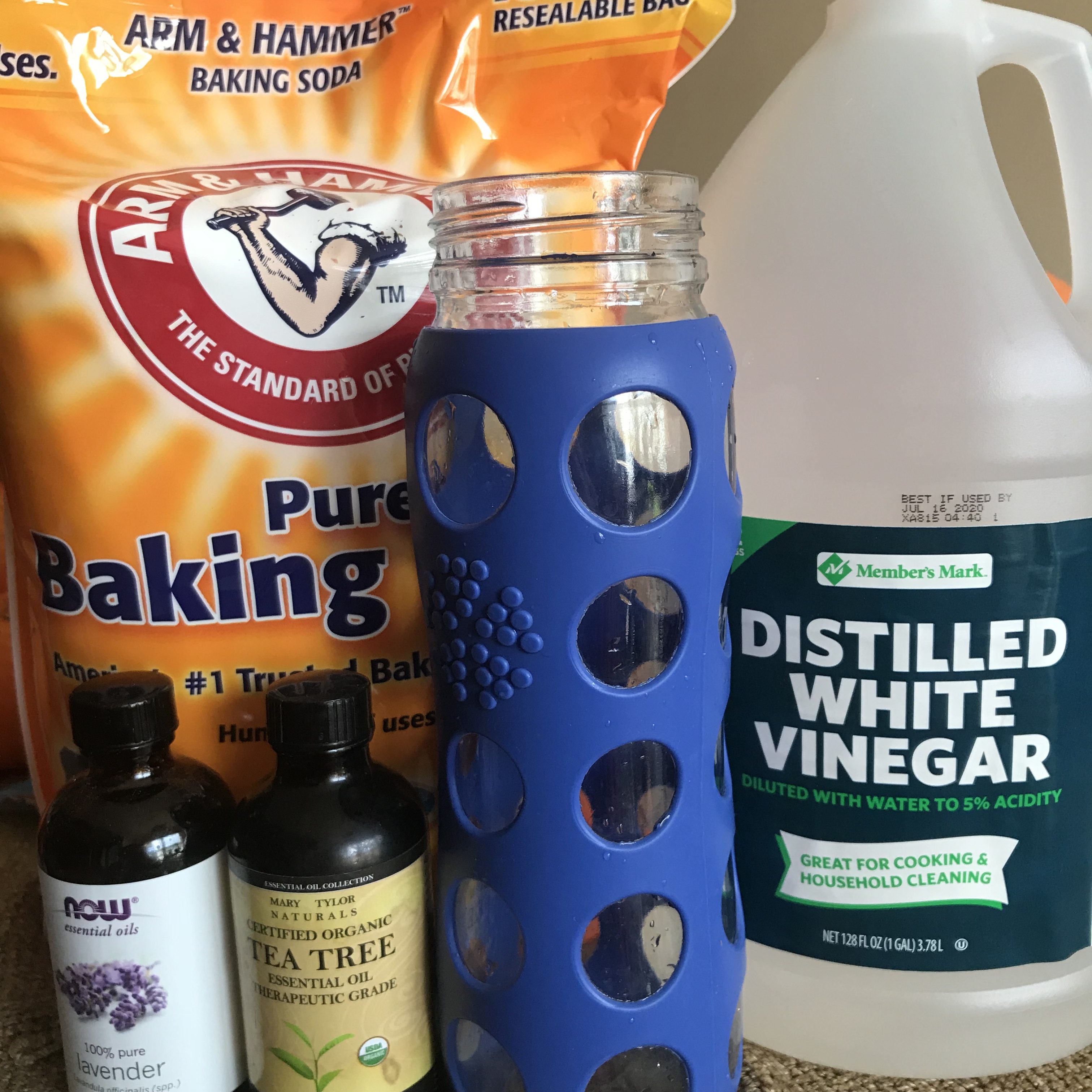
For hair-washing there are a few options. A method that works for all types of hair consists of a baking soda/water rinse followed by a vinegar/water rinse. These rinses can be done in any type of jug, jar or bottle and a few drops of essential oils can be added for a pleasant scent. For a more detailed list of instructions on how to wash your hair this way, please see the post on washing hair with baking soda and vinegar. Please note that it may take a few washes before your hair and scalp fully adjust to using natural hair-wash .
Another method for washing hair uses castile soap. Not all people can use castile soaps to wash their hair. Individuals with very oils hair will have less luck with this method compared to individuals with drier hair. I cannot use castile soap more than once in a week because all soaps seem to leave a residue on my scalp that causes itchiness after a day. If you choose to use castile soap as your preferred hair wash, a rinse with vinegar/water after rinsing of the soap helps to remove any soap residue. There are also some natural bar soaps for shampooing but they are very similar to liquid castile soap when it comes to washing hair.
Bathing:
For general bathing, castile soap works very well. In addition, natural bar soaps are also a good choice. Be sure to avoid soaps that have many ingredients, artificial dyes, and fragrance. Natural soaps should only contain natural oils (coconut, olive, hemp, shea butter, almond, etc.), lye, essential oils for fragrance, colors derived from plants/vegetables, and natural preservatives such as rosemary extract or vitamin E (tocopherol).
Exfoliation:
The best method of exfoliating your skin is actually completely free! You don’t need anything except your own hand. The best time to exfoliate is while you are bathing. Once you’ve been in the shower for a few minutes, your skin will become very moist and soft. To exfoliate, rub the palm of your hand in circular motions over your skin. You will begin to feel the dead skin clump together under your fingers. Keep rubbing until you have done your entire face. I also gently rub my fingernails over my face to help scrape off the dead skin. Stretching your facial skin by moving your mouth around while doing this is also a good idea. This method is highly effective and leaves your skin soft, smooth, and ready to be hydrated.
Brushing Teeth:
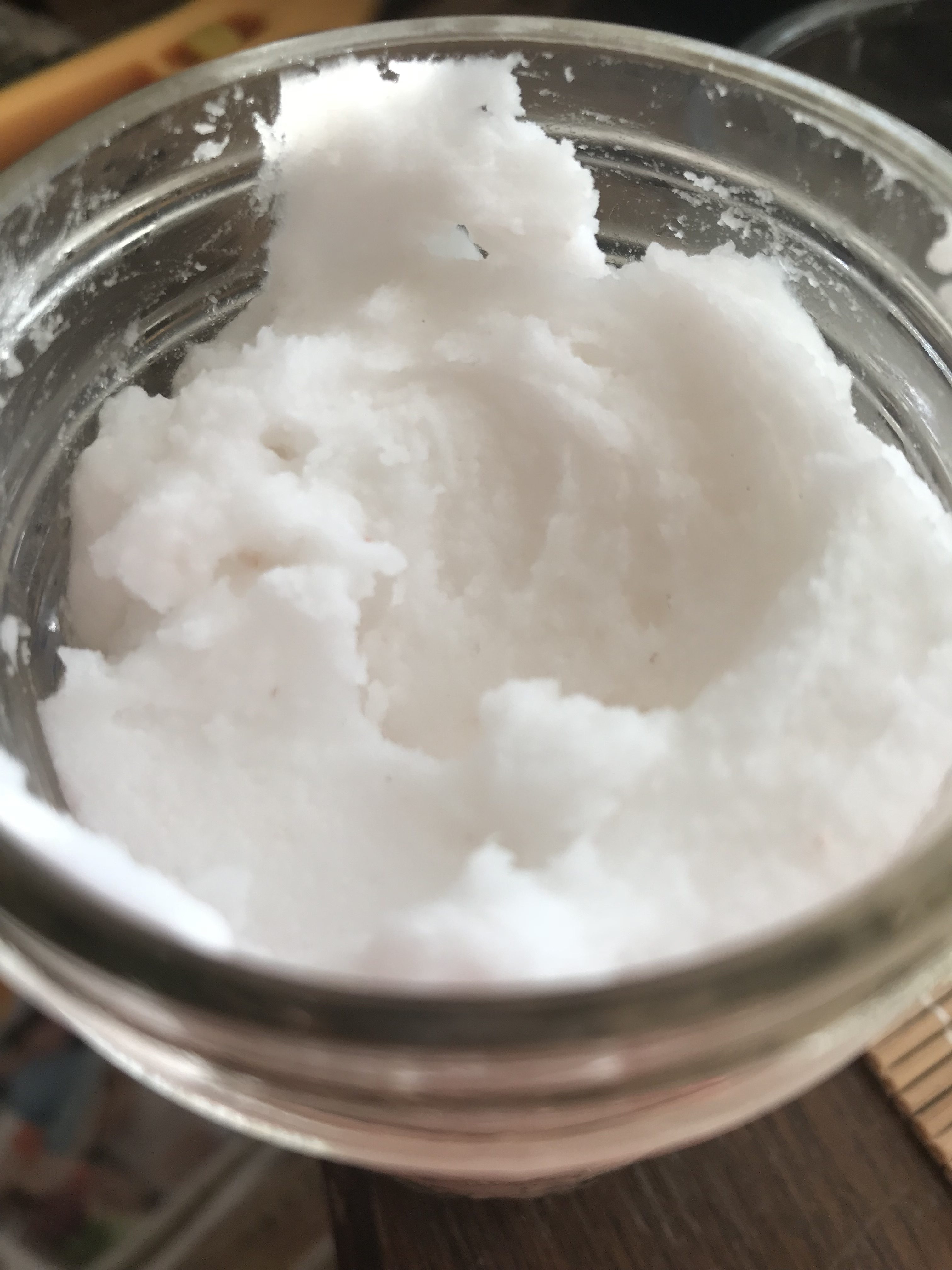
Many toothpastes contain harmful ingredients such as artificial coloring. You may not realize this but these colorants are absorbed through the skin and negatively impact immune health. It is also common for scleroderma symptoms to affect the mouth. Making it even more important to reduce exposure in this area. At the same time, maintaining adequate oral hygiene is essential for people with Scleroderma/Systemic Sclerosis as tooth loss can occur as well as gum recession. Inadequate oral hygiene also causes inflammation, not just in the mouth, but throughout the body. Teeth must be brushed at least twice a day as well as regularly flossed. You may choose to switch to a more natural brand of tooth paste, free of artificial flavor and dyes or you can make your own. Making your own toothpaste is very cost effective and easy to do. Homemade toothpaste consists of about equal parts baking soda and unrefined virgin coconut oil, thoroughly mixed together with a few drops of peppermint essential oil and a sprinkle of salt. If you are interested in making your own toothpaste, please see the post that details exactly how to do this.
Lotions and Moisturizers:
With Scleroderma/Systemic Sclerosis, keeping skin moist and hydrated is essential for skin health. The lotions and creams we put on our skin do not just sit on the exterior of our bodies, they are actually absorbed through the skin and are capable of causing damage and inflammation. Like all other commonplace hygiene products, lotions contain a long list of ingredients. A simple alternative to these products are natural nut/seed/fruit oils. I prefer to use coconut oil on my skin but have previously used almond oil, as well. Even olive oil can be used as an effective moisturizer. The best rule to follow here is that moisturizers should mostly only contain one ingredient. An example being pure coconut oil. There is also an oil called fractioned coconut oil that I find absorbs into my skin a little better than just regular virgin coconut oil. You really only need one moisturizer for you skin, so find one that you think absorbs well and has a pleasant/neutral odor. The best time to moisturize is right after finishing a shower or bath. If you suffer from skin tightness, specifically on the face/mouth, I recommend stretching these areas right after showering and applying moisturizer as you stretch the skin. To stretch your mouth, moisturize your face and then open your mouth as wide as you possibly can. Massage the oil into your stretched skin. Do this after every time you bathe.
Deodorant:
Many people these days seem to be becoming more aware of the dangers of deodorant. Just like lotion, deodorant is absorbed through the skin. The armpit is an area of the body where significant absorption occurs due to large pores and sweat glands. Many deodorants contain aluminum as well as artificial fragrances and many other chemicals. The aluminum and chemicals will be absorbed through your armpit so please check your deodorant. Luckily, deodorant is not something that you need to make for yourself these days in order to find a natural alternative. Although, you can make your own deodorant if you decide this is the best option. There are many recipes posted online for natural deodorant. Lemon slices can also be used as deodorant but many people do not find this to be a long term solution. I would recommend searching for brands dedicated to making natural deodorant such as Primal Pit Paste and Schmidt’s. A good natural deodorant will likely have ingredients similar to the ones listed here: coconut oil, baking soda, shea butter, bees wax, candelilla wax, arrowroot powder, jojoba oil, essential oils, and vitamin E (tocopherol).
Cosmetic products:
Cosmetic products are how many women subject their bodies to a host of chemical additives. Through things like lipsticks and lip glosses, these chemicals are directly ingested. Hairspray is directly inhaled. I urge you to become more aware of how you may be ingesting or absorbing the cosmetic products you use. I do not recommend using any store bought cosmetic products unless you are able to guarantee that the ingredients contained in them are not harmful. Some brands claim to have all natural cosmetics, but they are expensive and typically not really all that natural upon inspecting ingredient labels. Makeup is harder to make in comparison to things such as toothpaste. Some cosmetics can be made fairy easily, such as mascara, chap stick, and eyeliner. For more information on how to make mascara and chap stick, please see my posts. Eye liner is one of the cosmetics with a simple solution: activated charcoal. Activated charcoal is not charcoal for your grill! Do not buy grilling charcoal for this purpose! Activated charcoal is safe to ingest. Activated charcoal is a form of charcoal ground into a fine powder that can be used to replace eye-liner. For a tutorial on how to use activate charcoal to replace eye-liner, please see the post on activated charcoal eye-liner.
References
- Vojdani, A., & Vojdani, C. (2015). Immune reactivity to food coloring. Alternative Therapies in Health and Medicine, 21 Suppl 1, 52-62